

Best Neckband Earphones Under $20 in 2026 — What’s Actually Worth Buying

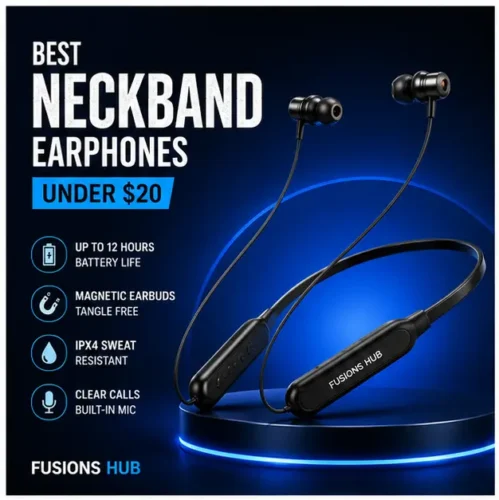
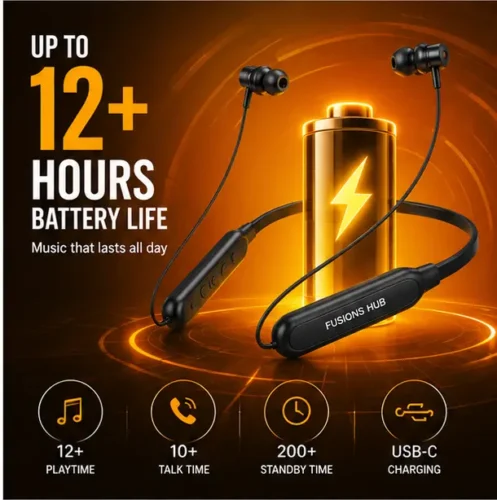
Table of Contents
Why Neckband Earphones Still Make Sense in 2026
True wireless earbuds have been the dominant story in audio for a few years now. Tiny, no cables, completely wireless. They look impressive. They get reviewed endlessly. And if you're sitting at a desk or commuting on a subway where you're mostly staying still — they're great.
But neckbands solve a specific set of problems that true wireless earbuds genuinely don't handle as well.
They don't fall out. The band around your neck keeps tension on the earphone cables, which keeps the earbuds seated in your ears even during movement. Running, training, cycling, working with your hands — neckbands stay put in situations where in-ear true wireless models regularly don't.
The battery life is longer. Because the neckband housing is larger than a tiny earbud case, manufacturers can fit bigger batteries. Neckband models can fit larger batteries in the collar, which means longer listening times and often better sound quality. Under $20, you're commonly seeing 10-15 hours of playtime — sometimes more — compared to 5-6 hours on budget true wireless earbuds.
You can't lose them. This sounds minor until you've lost a $30 earbud down a drain or under a treadmill. Neckbands stay connected to each other and to you. They're not going anywhere.
The magnetic earbuds on most neckband models snap together when you take them out, hanging safely around your neck while you have a conversation or grab a coffee. It's a genuinely useful design detail that true wireless earbuds can't replicate.
None of this means neckbands are better than true wireless earbuds in every situation. They're better in specific situations. Knowing which type fits your actual use case saves you from buying the wrong thing and being disappointed.
Best Neckband Earphones Under $20 — What You Can Realistically Expect
Before getting into specifics, it's worth being honest about what twenty dollars gets you in 2026.best neckband earphones under $20
The good news first. Bluetooth 5.0 is now standard even at the budget end of the neckband market. The neckband earphone market reflects steady demand for wireless audio solutions, driven by fitness trends, affordability, and advancements in technology. Magnetic earbuds that snap together when not in use are common. IPX4 or IPX5 water resistance — enough for sweat and light rain — is available at this price. Battery life of 8-12 hours per charge is achievable. Built-in microphones for calls are standard. USB-C charging is increasingly common, though some budget models still use micro-USB.
What you're not getting under $20: active noise cancellation, premium balanced sound drivers, companion apps with EQ control, multipoint connection between two devices simultaneously, or the build quality of $50+ options. These things genuinely cost more to produce and that cost gets reflected in price.
For commuting, gym use, outdoor work, running errands, or just not wanting silence while you cook or clean — under $20 neckbands in 2026 cover all of that without complaint.
What to Check Before Buying Any Budget Neckband
Most people look at the pictures, check the reviews, and order. That process works fine for some purchases. For budget audio gear it leads to a lot of returns. Here's what actually matters.
Bluetooth Version
5.0 is the minimum worth accepting in 2026. Anything older — 4.2, 4.0 — and you'll notice more connection instability, higher latency when watching videos, and faster battery drain. Most current budget neckbands have caught up to 5.0 and some now ship with 5.3. The difference in daily use is noticeable — 5.0 and above stays connected more reliably when your phone is in a bag or pocket and you move around.
Battery Life — Apply the Same Rule as Always
Advertised battery life is always measured at low volume in ideal conditions. Real-world battery life at normal listening volume with some calls mixed in is typically 20-25% lower than advertised. A neckband claiming 12 hours will realistically give you 9-10 in daily use. Plan accordingly — if you need something to last through an 8-hour workday, look for models claiming at least 10-12 hours.
Water Resistance Rating
For gym use or anything involving sweat, an IPX rating is non-negotiable. IPX4 handles sweat and light splashes from any direction. IPX5 is better — it can handle a directed stream of water, not just a splash. No IPX rating means no meaningful water protection, which means sweat will eventually damage it.
Magnetic Earbuds
This is a quality-of-life feature that sounds small until you've used a neckband without it. Magnetic earbuds snap together when you pull them out of your ears, holding them securely around your neck without dangling. On a neckband without magnets, the earbuds swing around freely and hit things. Get one with magnets.
Microphone Quality
Budget neckband mics range from surprisingly decent to genuinely bad. They're almost all fine for casual calls in quiet environments. In noise — traffic, gym, outdoors — the quality gap between a $15 neckband and a $50 one becomes obvious. If you're on work calls constantly in varied environments, a budget neckband might not be the right tool. For personal calls and occasional voice messages, they're acceptable.
The Neckband Material
Flexible silicone or rubber neckbands sit more comfortably and adapt to neck shape better than rigid plastic ones. Check product images carefully — a very stiff neckband can feel uncomfortable during extended wear, especially under a collar.
Neckband Earphones vs True Wireless Earbuds — Honest Comparison
People ask this constantly, so let's just settle it directly.
Neckbands win on: Battery life — significantly longer per charge than most true wireless earbuds at the same price. Stability during physical activity — they don't fall out. Value for features at low price points — you get more for your money. Call quality — the mic is positioned better relative to your mouth on most neckband designs. Not losing individual earbuds — both are connected to the band.
True wireless earbuds win on: No cable or band at all — completely free feeling. More compact and pocketable. Better for sleeping or lying down — no band pressing on your neck. Generally more aesthetically modern looking. Better for sitting still at a desk for long periods.
Neither is universally better. The right choice depends on how you actually use them day to day. If you're active, on calls a lot, or tend to lose small things — neckbands. If you value the completely wireless feel and mostly sit while listening — true wireless.
We covered this in more detail in our best wireless earbuds under $30 guide if you want to compare both formats side by side before deciding.
The Astro Neckband — What Makes It Stand Out at This Price
At the budget end of the neckband market, most products look similar on paper. The Astro Neckband Wireless Earphones is one that consistently comes up when people talk about getting genuine value under $20.
The design is built around everyday wearability — flexible neckband material that sits comfortably without pressing uncomfortably on your neck, magnetic earbuds that snap together cleanly when you take them out, and controls that are easy to find by touch without pulling out your phone. For commuting, gym sessions, or just moving through a day where you want music without thinking about your earphones — it covers the basics well.
Sound-wise, the bass response is solid for a budget product. Not the flat, lifeless sound that disappoints people about cheap earphones — there's actual low-end presence that makes music enjoyable rather than just audible. Call quality is acceptable for personal calls and voice messages. Battery life handles a full day of moderate use without needing a charge mid-day.
If you want something that does the job without any drama, fits comfortably, and won't stress you out if it gets sweated on at the gym — the Astro is worth a serious look.
Best Neckband Earphones Under $20 for the Gym
Gym use is where neckbands genuinely shine compared to every other earphone format.
The stay-in-ear reliability alone justifies it. True wireless earbuds — even decent ones — can work loose during intense training. A neckband with a proper in-ear fit keeps the earbuds seated regardless of how much you're moving. Add an IPX4 or IPX5 rating and the sweat issue is covered too.
What to look for specifically for gym use: IPX rating of at least IPX4, earbuds that create a seal in the ear canal rather than just sitting in the outer ear, a neckband flexible enough to sit comfortably under a t-shirt collar, and a long enough battery life to get through your workout without charging between sessions.
The magnetic earbuds design is particularly useful in a gym context — you can pull them out between sets, let them snap together around your neck while you rest or talk to someone, then pop them back in without fumbling around. It's a small thing that genuinely improves the experience of using neckbands for training.
The Astro Neckband Wireless Earphones checks these boxes at a price that doesn't make you nervous about sweat damage.
Neckband Earphones for Calls — What Actually Works
Call quality on budget neckbands varies more than sound quality does. Here's why.
The microphone position on a neckband sits somewhere around chest level — further from your mouth than the mic on a true wireless earbud or a traditional headset. Distance reduces pickup clarity, especially when there's background noise. Budget mics also have less sophisticated noise filtering than premium ones.best neckband earphones under $20
For quiet environments — home, quiet office, personal calls — most budget neckbands under $20 handle calls well enough. The person on the other end can hear you clearly and the audio is intelligible.
For noisy environments — commuting, gym, outdoor spaces — the limitations become more obvious. Background noise bleeds through more than on premium options and you may find yourself having to repeat things more often.
If calls are a primary use case and you regularly take them in noisy places, it's worth spending a bit more on a model that specifically advertises call noise reduction or multi-mic call clarity. If calls are occasional and mostly in quiet spaces, under $20 is perfectly fine.
How Long Should a Budget Neckband Actually Last?
Two different questions here — battery life per charge, and product lifespan overall.
Battery per charge: real-world expectation for a budget neckband claiming 10-12 hours is 8-10 hours at normal listening volume. That's plenty for most daily use patterns. Charge it every 1-2 days and you'll never run out unexpectedly.
Product lifespan: with reasonable care, a budget neckband should last 12-18 months. The things that kill them faster than normal wear are keeping them in a bag loose where the cable gets kinked repeatedly, not fully drying them after sweaty workouts before storage, and letting the battery fully die repeatedly without recharging. Battery life is a standout feature in well-made neckbands — but like all lithium batteries, degradation happens faster with poor charging habits.
For extending battery lifespan specifically — charge before it hits 10%, don't leave it at 100% for extended periods, and keep it away from heat. Battery University's research on lithium battery care is the most thorough resource on this if you want the full detail — the same principles apply to neckband batteries as to phone batteries.
What the $20 Price Point Actually Means for Sound Quality
This is where honest expectations matter most.
Under $20, you're getting drivers that produce enjoyable sound for casual listening — music streaming, podcasts, YouTube, calls. The bass response on good budget neckbands has improved noticeably in the last couple of years. You get actual low-end presence rather than the thin, flat sound that defined cheap earphones a few years ago.
What you don't get is accurate, reference-level sound reproduction. The soundstage — the sense of space and separation between instruments — is narrower than on premium options. Treble detail isn't as crisp. If you're someone who listens critically and notices these things, twenty dollars isn't going to satisfy you and you should spend more.
For the vast majority of listeners who just want music to sound good while they commute, work out, or do chores — the gap between a $20 neckband and a $60 one is much smaller than the price difference suggests. The quality floor at the budget end has risen significantly.
Common Mistakes People Make When Buying Budget Neckbands
Buying based on advertised battery life alone. The number on the listing is always optimistic. Read reviews specifically mentioning real-world battery life rather than trusting the spec sheet.
Ignoring the ear tip size. Most budget neckbands come with three sizes of ear tips — small, medium, large. The medium ones are pre-installed because they fit most people. But if the sound feels thin or the earbuds keep slipping, try the small or large tips before assuming the product is bad. Fit affects sound quality significantly.
Not checking if it's USB-C or micro-USB. Micro-USB is still common on budget neckbands and it's annoying in 2026 when everything else you own uses USB-C. Worth checking before buying if this matters to you.
Expecting ANC at this price. Active noise cancellation at under $20 doesn't exist in any meaningful form. What budget neckbands provide is passive noise isolation — the physical seal of the ear tip blocking some ambient sound. That's actually quite effective, but it's not ANC and doesn't behave like ANC.
Buying from sellers with no return policy. Budget audio gear has more quality variation than premium gear. A bad unit can slip through. Any legitimate seller should offer at least a 15-day return window.
How Neckbands Compare to Other Formats in Your Budget
If you're deciding between a neckband and other audio options around the same price:
vs Wired earphones: Wired earphones under $20 generally sound better than wireless neckbands at the same price because there's no Bluetooth processing involved. But no wire means no tangling, no cable pulling the earbuds out when you move, and no needing to stay close to your device. For active use, wireless wins. For sitting at a desk, wired often sounds better per dollar. Check out the Ronin R9 Handsfree if you want a solid wired option at this price point.
vs Budget true wireless earbuds: Covered earlier in detail — neckbands win on battery, stability, and not losing them. True wireless wins on form factor and feel. Pick based on your actual use case. Our best wireless earbuds under $30 guide covers the true wireless options if that format suits you better.
vs Budget over-ear headphones: Over-ear headphones at the same price often have better sound quality and longer battery life. The tradeoff is bulk — they don't fold down small, they're not gym-friendly, and wearing them outdoors looks and feels different. If portability matters, neckband. If sound quality and home/desk use is the priority, over-ear. The P47 Wireless Bluetooth Headphones are worth looking at in that category.
Related Reading From FusionsHub
- Astro Neckband Wireless Earphones — Full Product Details
- Best Wireless Earbuds Under $30
- P47 vs P9 Headphones — Let's Talk About Your Money
- ANC vs Battery Life — The Truth
- Why Is My Phone Charging Slow?
- Original vs Fake Charger — Real Danger Buying Guide
- Fast Charging Battery Damage — Is Your Charger Safe?
People Also Ask
Are neckband earphones better than earbuds under $20? For active use — gym, running, outdoor work, commuting — neckbands are generally better at this price. They stay in place, have longer battery life, and are harder to lose. For sitting still at a desk or wanting the completely wireless feel, true wireless earbuds make more sense. The best choice depends on how you actually use them.
How long do budget neckband earphones last on one charge? A budget neckband claiming 10-12 hours will realistically deliver 8-10 hours at normal listening volume in real-world conditions. That's enough for most daily use without mid-day charging. Battery capacity degrades over time with repeated charge cycles, so expect slightly less after 6-12 months of regular use.
Are cheap neckband earphones good for gym use? Yes, particularly if they have an IPX4 or higher water resistance rating. The neckband design keeps earphones from falling out during exercise, which is the main advantage over true wireless earbuds at the gym. Look for IPX4 minimum and magnetic earbuds that snap together during rest periods.
What is the point of magnetic neckband earphones? The magnets in the earbuds snap them together when you pull them out of your ears, holding them securely around your neck rather than dangling loose. This keeps them from hitting things, makes them easy to find and re-insert quickly, and activates auto-pause on some models when they snap together. It's a practical design detail that improves daily usability significantly.
Can I use neckband earphones for work calls? For calls in quiet environments, yes — most budget neckbands produce clear enough audio for personal and casual work calls. For frequent work calls in noisy environments — open offices, outdoor spaces, commuting — the microphone quality on sub-$20 models may not be sufficient for professional use. Consider spending more if calls are a primary and frequent use case in noisy settings.best neckband earphones under $20
Do neckband earphones work with iPhone? Yes. Neckband earphones use standard Bluetooth and work with any iPhone. The pairing process is the same as any Bluetooth device. You won't get Siri integration or the seamless switching of Apple's own earphones, but basic functionality — music, calls, volume controls — works fine.
How do I stop my neckband earphones from hurting my neck? Usually a fit issue rather than a product defect. Make sure you're wearing the neckband with the controls on one side as intended — wearing it backwards puts the weight distribution off. Also check that the neckband material is flexible enough to conform to your neck rather than holding a fixed rigid shape. Very stiff neckbands on smaller necks cause discomfort during extended wear.
Looking for a neckband that actually stays put and sounds good without spending a fortune? The Astro Neckband Wireless Earphones covers the basics well — comfortable fit, magnetic earbuds, and battery life that handles a full day without drama.
Content
P47 vs P9 Headphones: Which Budget King Should You Actually Buy? Let’s be real for a second. We all want those premium, high-end headphones we see on social media, but not everyone has $500 to drop on a pair of ear muffs. Most of us just want something that looks cool, sounds decent, and won't brea
pasted
Why Does My WiFi Keep Disconnecting — What's Actually Going On Before jumping into fixes, it helps to understand what's happening when WiFi drops. Your router is doing a surprisingly complicated job. It's managing wireless signals across multiple frequencies, handling connections from potentially do
pasted